
Markets reel as Middle East tensions escalate. See why oil hit $79, gold surged, and what this means for inflation and safe-haven assets in March 2026.
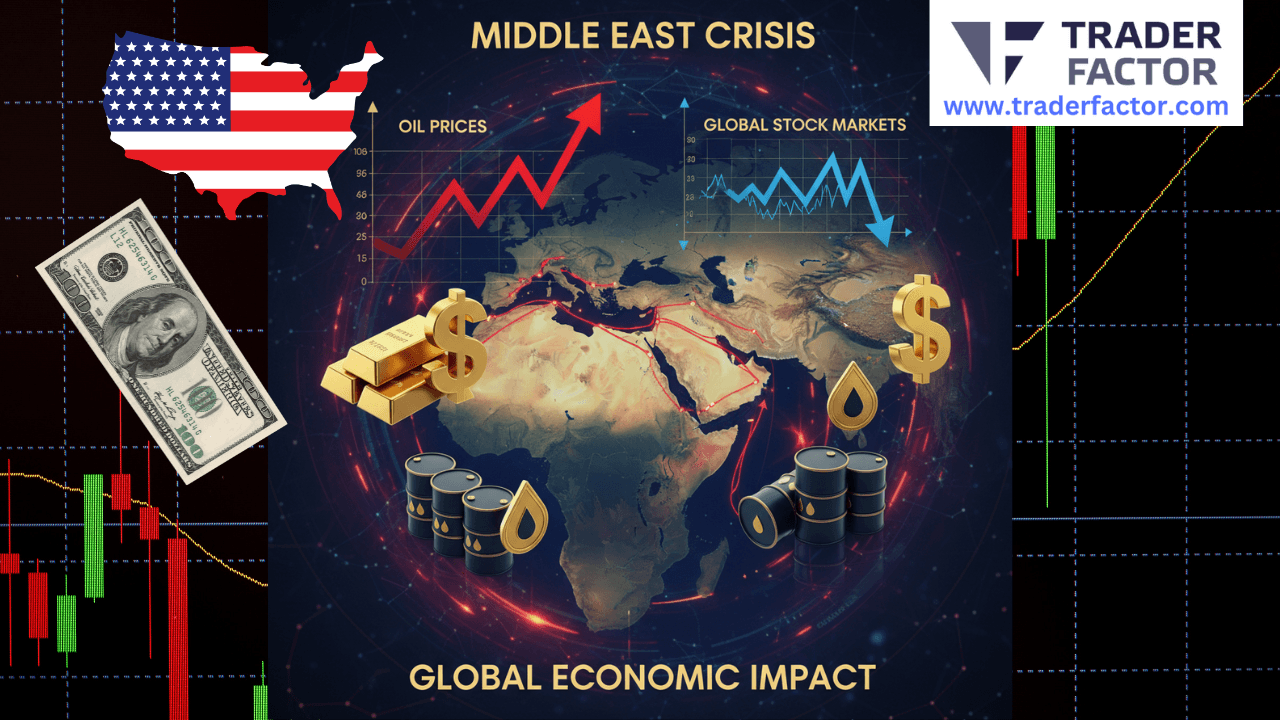
Middle East Crisis: Oil Spikes, Stocks Drop—What Now?
The alarm bells rang early Monday morning, and they weren’t the usual kind. If you checked your portfolio before your first coffee, you likely saw a sea of red where your tech stocks usually sit, and a surprising spike in commodities.
The escalation in the Middle East especifically the weekend strikes involving the U.S., Israel, and Iran has snapped the financial markets out of their complacent slumber.
We aren’t just looking at a standard geopolitical dip here. This feels different because it’s hitting a market that was already fragile, wrestling with high valuations and anxiety over the AI sector.
Let’s break down exactly what happened, why the numbers are moving the way they are, and most importantly what you should actually do about it.
Key Summary
- Event: Escalation of Middle East conflict following U.S.-Israel strikes on Iran (March 2026).
- Market Reaction: Brent crude oil surged ~8% to $79.05; Gold jumped 1.4% to $5,351; S&P 500 futures fell 1%.
- Critical Risk: Potential closure of the Strait of Hormuz, threatening 20% of global oil supply.
- Investor Sentiment: Shift from “risk-on” assets (stocks, crypto) to “safe havens” (Gold, USD, Bonds).
- Context: This crisis hits markets already jittery from the “AI scare trade” and private credit stress.
The Morning Snapshot: Chaos by the Numbers
The immediate reaction was textbook “flight to safety,” but the magnitude tells us investors are genuinely spooked. It’s not just about what happened over the weekend; it’s about the fear of what comes next.
Here is the raw data from the opening bell on Monday, March 2, 2026:
| Asset Class | Movement | Current Price | Context |
|---|---|---|---|
| Brent Crude Oil | ▲ ~8% | $79.05 / barrel | Fears of supply disruption in the Strait of Hormuz. |
| Gold | ▲ 1.4% | $5,351 / oz | Classic safe-haven buying amid uncertainty. |
| S&P 500 Futures | ▼ 1.0% | N/A | Risk-off sentiment hitting equities hard. |
| U.S. Dollar | ▲ 0.3% | Index Rising | Investors cashing out into the world’s reserve currency. |
| Asian Markets | ▼ 1.5% | Various | Immediate reaction from markets closest to the opening. |
Why Oil is the Real danger Zone
You might look at an 8% jump in Brent crude and think, “We’ve seen this before.” But context is everything.
The real anxiety isn’t just about Iranian production; it’s about the Strait of Hormuz. This narrow waterway handles roughly one-fifth of the world’s oil supply. If this chokepoint gets squeezed or closed, we aren’t talking about $80 oil. We are talking about a potential spike toward $100 or even higher.
Digital signals indicate tanker traffic has already slowed to a crawl. That is concrete data, not just speculation. When ships stop moving, supply chains break, and prices at the pump—and the grocery store—go up.
The “AI Scare Trade” Meets Geopolitics
It is crucial to understand that this crisis didn’t happen in a vacuum. The market was already on edge.
For weeks, we’ve been dealing with the so-called “AI scare trade”—concerns that the massive spending on artificial intelligence isn’t yielding immediate profits, combined with cracks in the private credit markets. Investors were looking for a reason to sell, and the Middle East escalation gave them a perfect excuse.

When you have stocks trading at historically high valuations, they are priced for perfection. A missile strike is the opposite of perfection. It forces a repricing of risk. Suddenly, that high-growth tech stock looks a lot riskier than a bar of gold or a U.S. Treasury bond.
Regime Risk vs. Surgical Strikes
Here is the proprietary insight you won’t get from a generic headline: The market is currently trying to figure out if this is a “surgical strike” or a “regime change” scenario.
- Scenario A (Surgical Strike): The conflict is contained. The U.S. and Israel hit specific targets, Iran retaliates symbolically, and everyone goes back to business. In this case, the market dip is a buying opportunity.
- Scenario B (Regime Risk): The strikes destabilize the Iranian leadership, leading to a prolonged, messy power vacuum and sustained conflict.

Right now, the smart money is hedging for Scenario B. The death of high-profile leadership figures suggests we have moved past simple skirmishes. If the conflict drags on, the “risk premium” on oil and stocks will stay high. We aren’t just pricing in a bad weekend; we are pricing in a bad year.
Inflation is the Elephant in the Room
Why should you care if oil hits $90 or $100? Because oil feeds into everything.
If energy prices stay elevated, the fight against inflation gets much harder. Central banks might be forced to keep interest rates higher for longer, or even raise them again. That is the nightmare scenario for stocks and bonds alike.

William Jackson, a chief economist, noted that a prolonged conflict could add 0.6-0.7 percentage points to global inflation. That might sound small, but in an economy fighting for stability, it’s massive. It eats into corporate margins and consumer wallets simultaneously.
Actionable Conclusions: What Should You Do?
Panic selling is rarely a good strategy, but sitting on your hands isn’t great either. Here is a practical look at how to navigate this volatility.
1. Don’t Buy the Dip… Yet
Barclays analysts put it bluntly: “The risk-reward doesn’t seem compelling.”
History usually rewards buying geopolitical dips, but this situation has too many “unknown unknowns.” Wait for the dust to settle. If the S&P 500 drops significantly more (think 10% correction territory), that is your entry point. For now, cash is a valid position.
2. Look at “Real” Assets
Gold hitting $5,351 isn’t a fluke. In times of war and inflation, paper assets (stocks/bonds) feel flimsy. Real assets—gold, commodities, real estate—tend to hold value better. If your portfolio is 100% equities, consider this a wake-up call to diversify.
3. Watch the Dollar
The U.S. Dollar rising tells you that despite the U.S. involvement in the conflict, global capital still views America as the safest house in a bad neighborhood. A strong dollar is good for U.S. purchasing power but can hurt the earnings of multinational companies.
4. Why the U.S. Dollar Stays Strong Amid Crisis
The U.S. Dollar Index (DXY) remains high despite the Middle East crisis due to its role as a global safe-haven asset. In times of geopolitical uncertainty, investors often seek refuge in the U.S. dollar, which is considered the world’s most stable and reliable currency. This “flight to safety” leads to increased demand for the dollar, especially as riskier assets like stocks and cryptocurrencies decline.
Additionally, the dollar benefits from its liquidity and widespread use in global trade, which becomes even more critical during crises. Higher U.S. interest rates also make the dollar more attractive to investors seeking better returns compared to other currencies. Meanwhile, currencies tied to regions affected by the crisis often weaken, further boosting the DXY. This combination of factors underscores the dollar’s resilience during periods of global instability.
The Bottom Line Amid Escallating Middle East Crisis
The markets have opened with a jolt, and the volatility is likely here to stay for the week. Keep an eye on the Strait of Hormuz headlines that is your leading indicator. If the tankers start moving again, the oil premium will vanish, and stocks will rally. If they stay docked, buckle up.

Disclaimer:
All information has been prepared by TraderFactor or partners. The information does not contain a record of TraderFactor or partner’s prices or an offer of or solicitation for a transaction in any financial instrument. No representation or warranty is given as to the accuracy or completeness of this information. Any material provided does not have regard to the specific investment objective and financial situation of any person who may read it. Past performance is not a reliable indicator of future performance.