
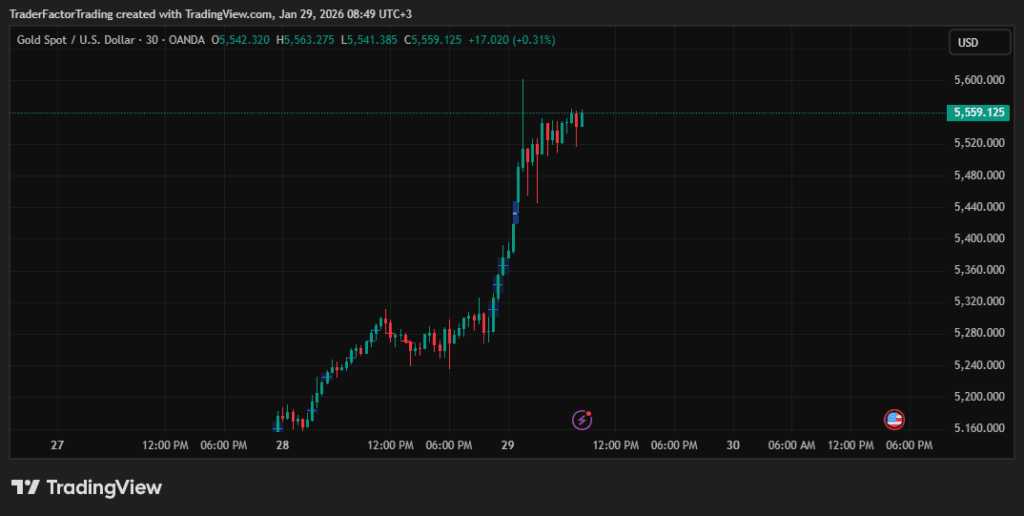
Gold prices have reached a historic high of $5,600 per ounce, driven by strong safe-haven demand, geopolitical tensions, and a weaker US Dollar. The Federal Reserve’s decision to keep interest rates steady has further supported the rally.
Meanwhile, President Trump’s remarks on Iran and his upcoming Fed Chair announcement have added to market volatility. Investors are closely watching these developments as gold continues to attract attention as a hedge against uncertainty.
Factors Driving Gold’s Rally
The recent surge in gold prices is not a random event but the result of several interconnected global factors. The precious metal’s climb to new heights is fueled by a perfect storm of geopolitical uncertainty, central bank policy, and currency market dynamics. Investors are increasingly turning to gold as a reliable store of value in a volatile environment. Each of these elements contributes significantly to the ongoing rally, creating strong upward momentum for the commodity.
Geopolitical Tensions Heighten Market Anxiety
Global political instability is a primary driver for the current gold rush. Recent statements from US President Donald Trump directed at Iran have significantly increased market anxiety. His warning for Iran to negotiate a new deal regarding nuclear capabilities or face severe consequences has sent ripples through the financial world. This type of high-stakes political maneuvering creates an atmosphere of uncertainty, prompting investors to move away from riskier assets and seek refuge in traditional safe havens like gold, which historically performs well during times of conflict and tension.
Federal Reserve’s Interest Rate Stance
The monetary policy set by the US Federal Reserve plays a crucial role in gold’s valuation. The central bank’s recent decision to hold interest rates steady within the 3.5% to 3.75% range has provided significant support for the metal. Because gold is a non-yielding asset, meaning it does not pay dividends or interest, it becomes more attractive when interest rates are low. Lower rates decrease the opportunity cost of holding gold compared to interest-bearing assets like bonds, making it a more appealing choice for investors looking to preserve capital.
Weaker US Dollar Boosts International Demand
The value of the US Dollar on the world stage directly influences the price of gold. Since gold is predominantly priced in US dollars, a weaker dollar makes the metal cheaper for investors holding other currencies. This increased purchasing power from international buyers stimulates demand and helps push prices higher. The recent softening of the greenback has made gold more accessible and attractive to a broader global market, contributing substantially to its impressive rally and pushing it toward record-breaking figures.
Technical Analysis and Market Sentiment
Gold’s technical indicators show strong bullish momentum. The 21-day Simple Moving Average (SMA) is well above the 50-, 100-, and 200-day SMAs, signaling continued upward pressure. However, the Relative Strength Index (RSI) suggests the market is overbought, which could lead to short-term consolidation.
Market sentiment remains cautious but optimistic. Central banks and private investors are increasing their gold holdings, viewing it as a hedge against economic and political instability. Analysts predict that any pullbacks in gold prices will likely be seen as buying opportunities.
Conclusion
Gold’s record-breaking rally reflects growing concerns about global stability and economic policy. With geopolitical risks and central bank actions in focus, gold is expected to remain a key asset for investors seeking safety. As markets digest these developments, the precious metal’s upward trajectory appears far from over.
Disclaimer:
All information has been prepared by TraderFactor or partners. The information does not contain a record of TraderFactor or partner’s prices or an offer of or solicitation for a transaction in any financial instrument. No representation or warranty is given as to the accuracy or completeness of this information. Any material provided does not have regard to the specific investment objective and financial situation of any person who may read it. Past performance is not a reliable indicator of future performance.