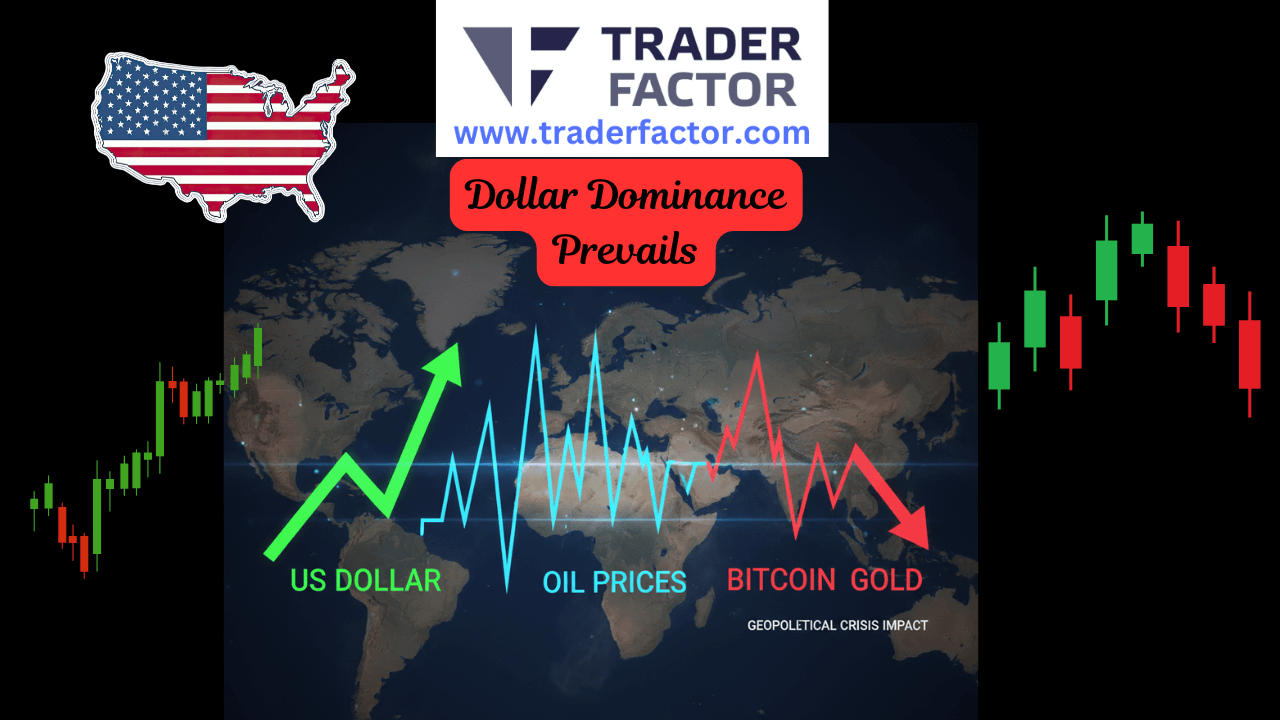

The recent escalation of conflict in the Middle East over the past weekend has sent significant shockwaves through global financial markets. Geopolitical turmoil of this magnitude typically triggers a rapid reassessment of risk, leading investors to abandon volatile assets in favor of more stable ones.
This report analyzes the market’s reaction, focusing on the US Dollar’s performance and the subsequent ripple effects across major forex pairs, gold, and Bitcoin. Our analysis uses proprietary data and market observations to provide concrete insights and actionable conclusions for traders navigating this volatile period.
Key Takeaways
- Dollar as Ultimate Safe Haven: The US Dollar Index (DXY) surged following the conflict, reaching a high of 99.364. This rally reflects a classic flight-to-safety, where investors seek the liquidity and perceived security of the dollar during geopolitical uncertainty. The DXY saw its largest one-day jump since May of the previous year.
- Pressure on Major Currencies: The dollar’s strength created significant downward pressure on major currency pairs. Economies heavily reliant on energy imports, like Japan and those in the Eurozone, saw their currencies (JPY, EUR) weaken considerably.
- Commodity and Crypto Divergence: Gold, a traditional safe-haven asset, initially spiked above $5,400 per ounce, driven by investor fear. However, the powerful rally in the US dollar has since created headwinds, capping further gains. In contrast, Bitcoin has shown risk-off behavior, with prices declining amid broader market uncertainty.
- Oil Price Shock: Oil prices experienced a sharp surge, with Brent crude briefly touching $84.46 per barrel. This spike is a direct response to fears of supply chain disruptions in the Middle East, particularly concerning critical shipping lanes like the Strait of Hormuz.

Methodology
This analysis is based on a review of market data from March 2 to March 4, 2026. We examined price action, percentage changes, and inter-market correlations for the US Dollar Index (DXY) and key asset pairs. The findings are derived from observing market reactions to headlines, institutional commentary, and the flow of capital between risk-on and risk-off assets.
Market Findings: A Clear Flight to Safety
The market’s response was swift and definitive, characterized by a strong move into safe-haven assets, with the US Dollar leading the charge.
How the US Dollar Became the Primary Beneficiary
The DXY’s rally to 99.364 was not just a technical move; it was a fundamental reaction to global instability. In times of crisis, international investors and corporations prioritize capital preservation. The US Dollar, being the world’s primary reserve currency, offers unmatched liquidity and stability. This “safe-haven bid” strengthens the dollar against other currencies.
Furthermore, the surge in oil prices introduces inflationary risks. This complicates the Federal Reserve’s policy decisions, potentially delaying anticipated rate cuts. The prospect of higher-for-longer interest rates in the US makes the dollar more attractive to hold, further fueling its rally.

Impact on Major Forex Pairs
The dollar’s strength was felt across the board:
- EUR/USD: The Euro fell nearly 1% against the dollar. Europe’s status as a major energy importer makes its economy particularly vulnerable to oil price shocks. Concerns about a potential slowdown in European growth weighed heavily on the common currency.
- GBP/USD: Sterling slid approximately 0.6% for similar reasons. The UK faces a dual threat of higher inflation from energy costs and a potential hit to economic activity.
- USD/JPY: The Yen weakened by over 1% against the greenback. As a net energy importer, Japan’s economy is highly sensitive to rising oil prices, diminishing the Yen’s own safe-haven appeal in this specific crisis.
- AUD/USD & USD/CAD: The Australian Dollar, a classic “risk-on” currency, weakened as investors shed risk. Conversely, the Canadian Dollar, benefiting from Canada’s status as a major energy exporter, showed more resilience compared to other majors.

Gold and Bitcoin: A Tale of Two Havens
The reaction in gold and Bitcoin highlights a key market dynamic.
- Why did Gold spike? Gold surged above $5,400 per ounce as investors initially sought its historical protection against war and inflation. This initial reaction is typical during geopolitical flare-ups. However, the overwhelming strength of the US dollar has acted as a counterforce. A stronger dollar makes gold more expensive for holders of other currencies, which can dampen demand.
- Why did Bitcoin fall? Bitcoin has behaved more like a risk-on technology asset than a digital safe haven. The price decline suggests that during this period of macroeconomic uncertainty, institutional investors are reducing their exposure to assets perceived as volatile, including cryptocurrencies.
Comparative Asset Performance (Post-Conflict)
| Asset | Peak/Trough Level | Approximate % Change | Behavior | Key Driver |
|---|---|---|---|---|
| US Dollar (DXY) | 99.364 | > +1.0% | Strong Rally | Safe-Haven Demand |
| Oil (Brent Crude) | $84.46 | > +6.0% | Surge | Supply Disruption Fears |
| Gold | > $5,400/oz | > +3.0% | Initial Spike, then Capped | Safe-Haven Demand vs. USD Strength |
| EUR/USD | Sub-1.1700 | ~ -1.0% | Sharp Decline | USD Strength, Energy Fears |
| USD/JPY | > 157.00 | > +1.0% | Strong Rally | USD Strength, JPY Weakness |
| Bitcoin | ~$69,120 | ~ -5.0% (initial) | Decline, then recovery | Risk-Off Sentiment |

Conclusion and Actionable Recommendations
The market has clearly defined the US Dollar as the ultimate safe haven in the current geopolitical landscape. The conflict’s impact on oil prices is the primary transmission mechanism for volatility, affecting inflation expectations and economic growth outlooks for energy-importing nations.
Recommendations for Traders:
- Monitor the DXY: The US Dollar Index is the primary barometer of market fear. Continued strength suggests risk-off sentiment prevails. A retreat below key technical levels may signal a calming of tensions.
- Factor in Energy Prices: Currencies of energy-importing countries (e.g., EUR, JPY) will remain under pressure as long as oil prices are elevated. Conversely, currencies of energy exporters (e.g., CAD, NOK) may outperform.
- Approach Gold with Caution: While gold is a safe haven, its performance is currently tethered to the dollar. Watch for a potential decoupling where both assets rise, which would signal extreme market stress.
- Assess Risk Assets Carefully: Risk-on assets like the Australian dollar and equities will likely remain volatile. Wait for clear signs of de-escalation before assuming the market has stabilized. Bitcoin’s performance indicates it should be treated as a high-risk asset in this environment.

Appendix
- What is a Safe-Haven Asset? A safe-haven asset is a financial instrument that is expected to retain or increase in value during times of market turbulence and uncertainty. Investors seek these assets to limit their exposure to losses when markets are declining. Examples from this event include the US Dollar and Gold.
- What is a Risk-On Asset? A risk-on asset is a financial instrument that tends to increase in value when the market’s risk appetite is rising and decline when it is falling. These assets are associated with higher growth potential but also higher volatility. Examples from this event include the Australian Dollar, equities, and Bitcoin.
Disclaimer:
All information has been prepared by TraderFactor or partners. The information does not contain a record of TraderFactor or partner’s prices or an offer of or solicitation for a transaction in any financial instrument. No representation or warranty is given as to the accuracy or completeness of this information. Any material provided does not have regard to the specific investment objective and financial situation of any person who may read it. Past performance is not a reliable indicator of future performance.