
Compare Eightcap, IC Markets and Pepperstone on spreads, platforms, fees, crypto CFDs and trading styles. Find the best forex broker for 2026.
Key Takeaways
- IC Markets offers the lowest spreads (EURUSD from 0.0 pips, average 0.06 pips) and is best for scalping and high‑frequency trading.
- Pepperstone provides the widest platform range (MT4, MT5, cTrader, TradingView) and is the most beginner‑friendly broker.
- Eightcap leads in crypto CFD trading with over 250 cryptocurrency pairs and commission‑free spreads.
- All three brokers are regulated by top‑tier authorities (ASIC, FCA, CySEC) and offer segregated client funds.
- Commission structures are identical across all three: $3.50 per side per standard lot on Raw accounts.
- Pepperstone has the most extensive educational resources and 24/5 multilingual customer support.
- IC Markets is the only broker among the three that does not offer native TradingView integration.
- Eightcap’s TradingView integration is its standout feature, making it ideal for chart‑focused traders.
- Pepperstone offers the largest share CFD selection (500+ DMA shares) and the most forex pairs (80+).
- For algo trading, IC Markets (cTrader) and Pepperstone (MT4/MT5, cTrader) are the strongest choices.
Eightcap vs IC Markets vs Pepperstone 2026 Broker Comparison
Updated April 2026
Choosing the right forex broker can be overwhelming. Three names consistently appear at the top of every serious trader’s shortlist: Eightcap, IC Markets, and Pepperstone. Each is well‑regulated, globally respected, and offers competitive trading conditions. But they are not the same.
This head‑to‑head comparison breaks down every major factor spreads, platforms, regulation, instruments, and trading styles to help you decide which broker truly fits your needs in 2026.
Eightcap is regulated by multiple Tier-1 authorities including ASIC (Australia), FCA (UK), and CySEC (Cyprus), which adds an important layer of trust for traders concerned about fund safety.

Overview: Which Broker is Best?
Before diving into the details, here is the high‑level summary. Each broker has a distinct area of dominance.
- Eightcap → Best for crypto CFDs + TradingView integration. If you trade Bitcoin, Ethereum, or any of the 250+ altcoin CFDs, Eightcap is your natural choice. Its native TradingView integration is also a major advantage for modern chartists.
- IC Markets → Best for ultra‑low spreads + scalping. IC Markets is famous for its razor‑thin spreads, deep liquidity, and execution speed. It is the go‑to broker for scalpers, high‑frequency traders, and algorithmic traders.
- Pepperstone → Best for overall balance + platform variety. Pepperstone offers the widest range of trading platforms (MT4, MT5, cTrader, TradingView) and consistently strong support. It is the most beginner‑friendly among the three while still satisfying advanced traders.
All three brokers are regulated by top‑tier authorities (ASIC, FCA, CySEC, and offshore entities) and serve hundreds of thousands of active traders worldwide. Their differences lie in the details.
⭐Which is better – Eightcap, IC Markets, or Pepperstone?
IC Markets is best for low spreads and scalping, Pepperstone offers the best overall balance of tools and platforms, while Eightcap stands out for crypto CFD trading and TradingView integration. Your choice depends entirely on your trading style and instrument preference.
Spreads & Fees Comparison
For most traders, the single most important factor is trading costs. All three brokers use a similar pricing model: a Raw/ECN account with tight spreads plus a small commission. Here is how they compare on the most popular pair – EURUSD.
Raw/ECN Spreads (EURUSD)
| Broker | Typical Raw Spread (EURUSD) | Commission per Side (per standard lot) | Round Turn Cost (1 lot) |
|---|---|---|---|
| Eightcap | 0.0 – 0.2 pips (avg ~0.1) | $3.50 | $7.00 + spread |
| IC Markets | 0.0 – 0.1 pips (avg ~0.06) | $3.50 | $7.00 + spread |
| Pepperstone | 0.0 – 0.2 pips (avg ~0.1) | $3.50 | $7.00 + spread |
Key observations:
- IC Markets consistently offers the tightest average spreads – often 0.06 pips on EURUSD during liquid sessions. For a scalper making hundreds of trades per day, that tiny difference adds up significantly.
- Eightcap and Pepperstone are very close, typically averaging 0.1 pips on EURUSD Raw accounts. For most retail traders, the difference is negligible. Only very high‑volume traders will notice a meaningful cost advantage from IC Markets.
- Commission rates are identical across all three: $3.50 per side per standard lot (or currency equivalent). That means the only variable is the spread itself.
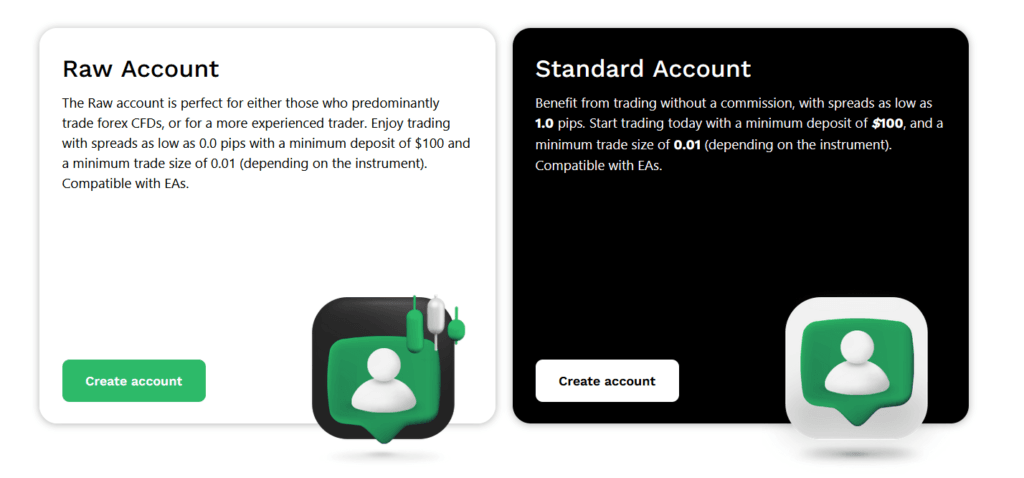
Standard Account Comparison (No Commission)
If you prefer a simpler, commission‑free structure, all three brokers offer Standard accounts where the spread is slightly wider.
| Broker | Standard Account Spread (EURUSD) | Commission |
|---|---|---|
| Eightcap | 1.0 – 1.2 pips | $0 |
| IC Markets | 0.8 – 1.0 pips | $0 |
| Pepperstone | 0.8 – 1.0 pips | $0 |
Winner for low spreads: IC Markets (both Raw and Standard accounts).
⭐ Which broker has the lowest spreads?
IC Markets generally offers the lowest spreads among the three, with EURUSD spreads starting from 0.0 pips and averaging 0.06 pips on its Raw account. This makes it the top choice for scalpers and high‑frequency traders who demand the tightest possible pricing.
Other Costs to Consider
- Overnight swaps – All three charge competitive swap rates that vary by instrument and direction. No clear winner; they are broadly similar.
- Deposit and withdrawal fees – All three brokers do not charge internal deposit or withdrawal fees. Third‑party payment providers may apply their own charges.
- Inactivity fees – None of the three brokers charge a standard inactivity fee for most entities, but regional variations exist (especially for EU clients).

Verdict on spreads & fees: IC Markets wins for ultra‑low spreads. Eightcap and Pepperstone tie for second place – both are highly competitive and more than adequate for 95% of traders.
Trading Platforms Comparison
The platform you use determines your entire trading experience. This is where the three brokers diverge significantly.
Platform Offerings at a Glance

| Platform | Eightcap | IC Markets | Pepperstone |
|---|---|---|---|
| MetaTrader 4 (MT4) | ✅ | ✅ | ✅ |
| MetaTrader 5 (MT5) | ✅ | ✅ | ✅ |
| cTrader | ❌ | ✅ | ✅ |
| TradingView | ✅ (native) | ❌ | ✅ (native) |
| Proprietary mobile app | ❌ | ❌ | ❌ (all use third‑party apps) |
Breakdown by broker:
- Eightcap – Strong focus on TradingView. Eightcap was one of the first brokers to deeply integrate TradingView as a first‑class platform. For traders who live inside TradingView for charting and analysis, this is a huge advantage. Eightcap also offers MT4 and MT5, but its TradingView integration is its standout feature.
- IC Markets – The only broker in this comparison that does not offer TradingView. Instead, IC Markets provides cTrader alongside MT4 and MT5. cTrader is a powerful, modern platform with excellent depth of market (DOM) and advanced order types. It is particularly popular among serious scalpers and algo traders.
- Pepperstone – The most platform‑diverse broker. Pepperstone offers MT4, MT5, cTrader, and TradingView – all natively integrated. This gives traders complete freedom to choose whichever platform suits their style. Pepperstone also offers a seamless account linking across platforms, meaning you can switch between MT4 and TradingView without changing your login.
⭐ Which broker has the best trading platform?
Pepperstone offers the widest range of platforms including MT4, MT5, cTrader, and TradingView, making it the best choice for traders who value platform flexibility. Eightcap stands out for its strong TradingView integration, while IC Markets is preferred by traders who want cTrader and do not need TradingView.
Verdict on platforms:
- Best for TradingView users → Eightcap or Pepperstone (tie).
- Best for cTrader users → IC Markets or Pepperstone.
- Best for platform variety → Pepperstone.
- Best for algo traders → IC Markets (cTrader’s automation features are excellent) or Pepperstone.
Regulation & Safety
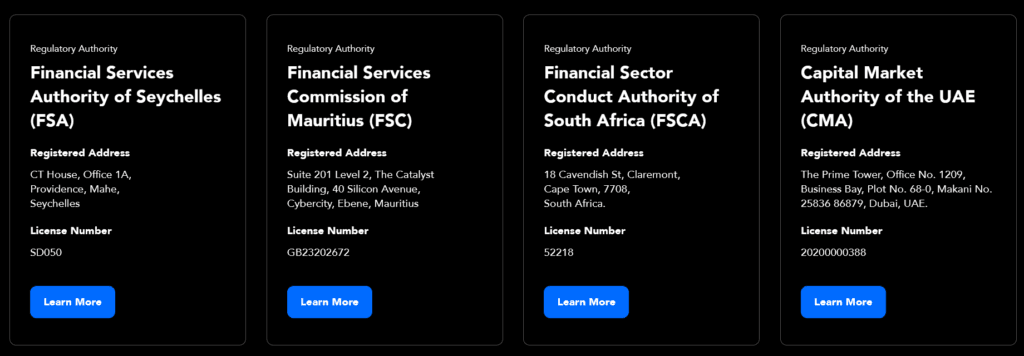
Trust is non‑negotiable when choosing a broker. All three firms are well‑regulated, but there are nuances in their regulatory footprints.
Regulatory Licenses
| Broker | Tier‑1 Regulators | Other Licenses |
|---|---|---|
| Eightcap | ASIC (Australia), FCA (UK), CySEC (Cyprus) | SCB (Bahamas) |
| IC Markets | ASIC, CySEC | SCB (Bahamas), FSA (Seychelles) |
| Pepperstone | ASIC, FCA, CySEC | SCB (Bahamas), DFSA (Dubai) |
What this means:
- All three are regulated by the Australian Securities and Investments Commission (ASIC) and the Cyprus Securities and Exchange Commission (CySEC). These are considered strong, reputable regulators.
- Pepperstone also holds a UK FCA license (in addition to its Australian license). Eightcap also has FCA regulation. IC Markets does not have FCA; its European operations are covered by CySEC.
- Offshore entities (Bahamas, Seychelles, Dubai) exist for all three brokers to serve non‑EU, non‑Australian clients with higher leverage. These are still regulated, but leverage limits are looser.

Client fund protection:
- All three brokers segregate client funds from operational accounts.
- Negative balance protection is offered to retail clients in regulated jurisdictions (ASIC, FCA, CySEC).
- Investor compensation schemes (e.g., FSCS in the UK, ICF in Cyprus) apply depending on your entity.
⭐ Are Eightcap, IC Markets, and Pepperstone safe?
Yes, all three brokers are regulated by top‑tier authorities like ASIC and FCA, making them generally safe for trading. Pepperstone and IC Markets have slightly broader regulatory coverage, but Eightcap is equally trustworthy with its ASIC, FCA, and CySEC licenses.
Verdict on safety: Essentially a tie. All three are considered safe, well‑capitalized brokers. Choose based on your region and desired leverage.
Markets & Instruments
Not all traders trade only forex. The range of available instruments – especially crypto CFDs, indices, commodities, and shares – varies between the three.

Instrument Comparison
| Asset Class | Eightcap | IC Markets | Pepperstone |
|---|---|---|---|
| Forex pairs | 50+ | 60+ | 80+ |
| Crypto CFDs | 250+ (largest) | ~20 | ~20 |
| Indices CFDs | 15+ | 20+ | 20+ |
| Commodities | 10+ | 15+ | 15+ |
| Share CFDs | 200+ | 100+ | 500+ (through DMA) |
Key differences:
- Eightcap is the undisputed leader in crypto CFDs. With over 250 cryptocurrency pairs – including Bitcoin, Ethereum, Litecoin, Cardano, and dozens of altcoins – Eightcap offers the broadest selection. Spreads on crypto are commission‑free and highly competitive (Bitcoin from 12 points). If crypto is your primary focus, Eightcap is the obvious choice.
- IC Markets has a solid but standard range of instruments. Its strength lies in forex (60+ pairs) and indices, with deep liquidity. Crypto selection is limited to about 20 major coins.
- Pepperstone offers the most balanced range. It has the most forex pairs (80+), a strong share CFD offering (500+ DMA shares), and competitive crypto spreads. For traders who want to trade everything from forex to individual stocks, Pepperstone is the best all‑rounder.
⭐ Which broker is best for crypto trading?
Eightcap is the best among the three for crypto CFD trading due to its wide selection of over 250 cryptocurrency pairs and competitive spreads. Pepperstone and IC Markets offer only a limited range of major crypto CFDs.

Verdict on instruments:
- Crypto focused → Eightcap.
- Forex and indices → IC Markets or Pepperstone.
- Share CFDs → Pepperstone.
- All‑around selection → Pepperstone.
Best Broker by Trading Style
Different trading styles demand different broker features. Here is how the three brokers align with common trading approaches.

Scalping and Day Trading
- Best choice: IC Markets.
- Why: IC Markets offers the tightest spreads (averaging 0.06 pips on EURUSD), the fastest execution (co‑located servers in NY4 and LD5 data centers), and cTrader’s advanced DOM for scalpers. Eightcap and Pepperstone are also good, but IC Markets has an edge for pure scalping.
Beginner and Casual Traders
- Best choice: Pepperstone.
- Why: Pepperstone’s platform variety (including TradingView’s intuitive interface), excellent educational resources, and 24/7 multilingual support make it the most beginner‑friendly. The Standard account is simple, and the broker’s overall balance reduces friction for new traders.
Crypto CFD Trading
- Best choice: Eightcap.
- Why: Over 250 crypto pairs, commission‑free crypto spreads, and TradingView integration for crypto charting. No other broker in this comparison comes close.
Algorithmic and Automated Trading
- Best choice: IC Markets or Pepperstone (tie).
- Why: IC Markets offers deep liquidity and cTrader’s powerful automation (C# based). Pepperstone supports MT4/MT5 Expert Advisors and also offers cTrader. Both have strong API access for custom solutions.
High‑Volume and Institutional Traders
- Best choice: IC Markets.
- Why: IC Markets is known for its institutional‑grade liquidity and the lowest spreads for very large volumes. Its True ECN model appeals to high‑net‑worth traders and proprietary trading firms.
⭐ Which broker is best for beginners?
Pepperstone is generally the best for beginners due to its user‑friendly platforms, strong customer support, and balanced trading conditions. The wide range of platforms (including TradingView) and educational materials make the learning curve gentler than with IC Markets or Eightcap.
Customer Support and Education
Customer Support
- Eightcap – 24/5 live chat, email, phone. Support is responsive, but fewer language options compared to larger brokers.
- IC Markets – 24/7 live chat (including weekends), email, phone. Known for fast technical support.
- Pepperstone – 24/5 live chat, email, phone, plus dedicated account managers for higher tiers. Often rated highest for friendliness and clarity.
Winner: Pepperstone for overall quality; IC Markets for 24/7 availability.

Educational Resources
- Eightcap – Basic educational articles, glossary, and occasional webinars. Not a strong point.
- IC Markets – Moderate resources: trading guides, video tutorials, and a blog. More focused on advanced topics.
- Pepperstone – Extensive library: daily market analysis, webinars, trading courses, and a well‑maintained YouTube channel.
Winner: Pepperstone, especially for new traders.
Final Verdict – Which Broker Should You Choose in 2026?
There is no single “best” broker for everyone. Your choice should be guided by your trading style, instrument preferences, and platform needs.
Choose Eightcap if:
- You trade crypto CFDs as a primary or significant part of your portfolio.
- You prefer TradingView as your main charting and execution platform.
- You want a simple, competitive pricing structure without needing cTrader.
- You value a broker with strong crypto‑specific features.

Choose IC Markets if:
- You want the absolute lowest spreads – especially for scalping and high‑frequency trading.
- You prefer the cTrader platform over MT4/MT5 or TradingView.
- You run algorithmic trading strategies (cTrader’s automation is excellent).
- You need institutional‑grade liquidity and deep order books.
Choose Pepperstone if:
- You want the best overall trading experience – platforms, support, education, and instruments.
- You are a beginner or intermediate trader who values guidance and simplicity.
- You want maximum platform flexibility – the ability to switch between MT4, MT5, cTrader, and TradingView under one account.
- You trade a variety of asset classes (forex, indices, shares, crypto) and want balanced conditions across all.
⭐Quick Answer Which forex broker should I choose in 2026?
Choose IC Markets for the lowest spreads and scalping, Pepperstone for the best overall trading experience and platform variety, and Eightcap if you focus on crypto CFDs and TradingView‑based trading. Each broker is regulated and competitive your personal trading style determines the winner.

More Readings at TraderFactor
- Eightcap Spreads, Fees & Commissions Explained
- Eightcap Review 2026: Pros, Cons, and Is It Safe?
- FxPro Full Review 2026 – Pros, Cons & Fees
- FxPro Fees Explained – Spreads, Commissions & Swaps
- Best FxPro Alternatives for Low‑Deposit Trading
- FxPro Account Types Explained: MT4 vs MT5 vs cTrader
- Forex Broker Regulation Tier List
- What to Do If a Broker Delays Your Withdrawal
- Forex Spreads vs. Commissions: What’s the Real Cost?
- Best Forex Brokers for Beginners in 2026
- IronFX Review 2026: High Leverage and Copy Trading
- EXANTE Review 2026: A Broker for Professionals
About the Author
This analysis was prepared by Phyllis Wangui, financial markets analyst at TraderFactor. Phyllis specializes in geopolitical risk, central bank policy, and cross‑asset correlations. She brings a data‑driven yet narrative‑focused approach to daily market commentary.
Disclaimer:
All information has been prepared by TraderFactor or partners. The information does not contain a record of TraderFactor or partner’s prices or an offer of or solicitation for a transaction in any financial instrument. No representation or warranty is given as to the accuracy or completeness of this information. Any material provided does not have regard to the specific investment objective and financial situation of any person who may read it. Past performance is not a reliable indicator of future performance.