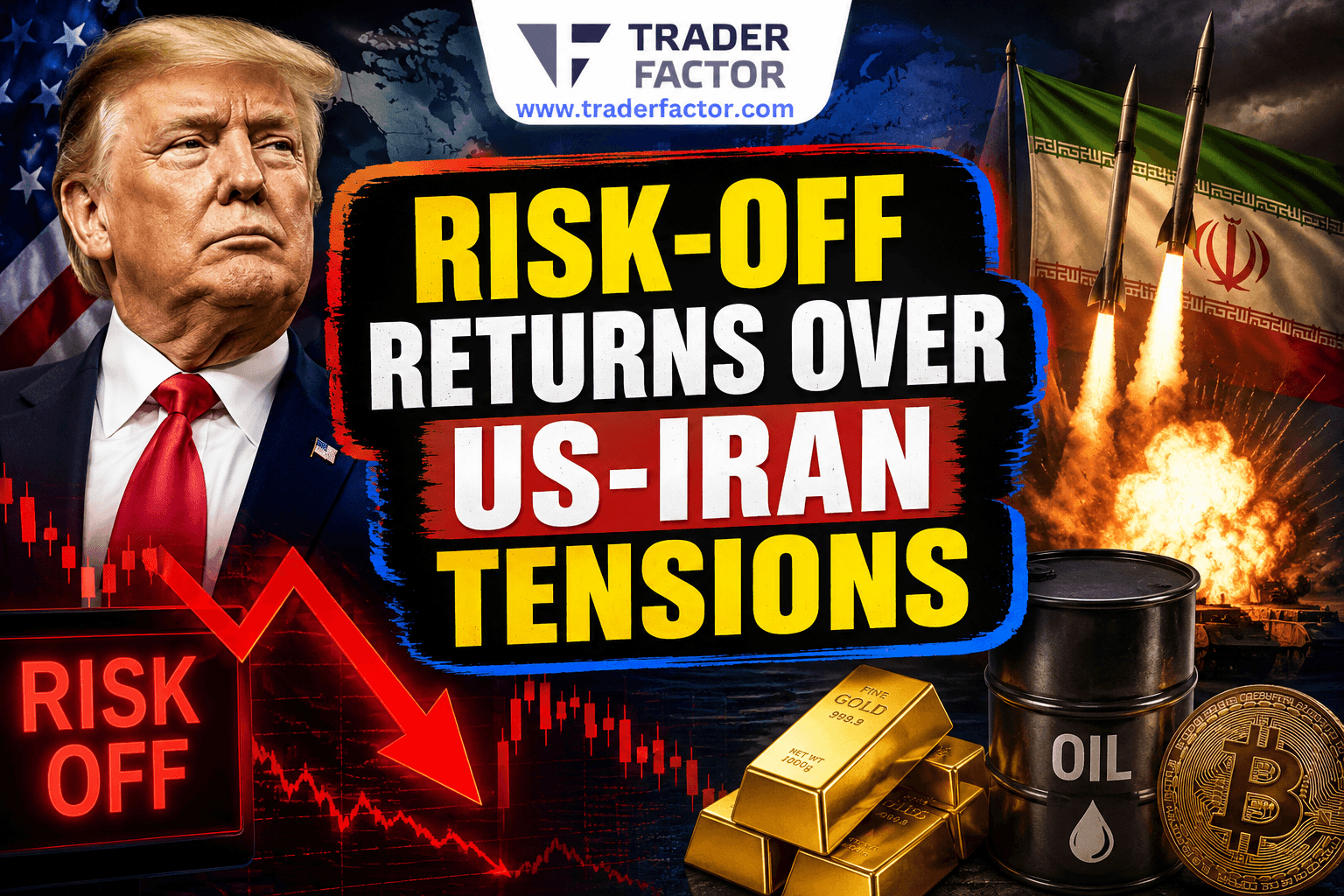

Forex Market Today: Oil and dollar rise as US-Iran tensions trigger risk-off trading, pressuring gold, crypto, equities and major currencies ahead of NFP on Friday.
⚡ Forex Market Today: Key Takeaways
▲ US-Iran tensions trigger renewed risk-off positioning across global markets
▲ Oil rises above $90 as traders price in higher geopolitical supply risks
▲ US dollar strengthens as investors seek defensive assets
▼ Gold falls despite geopolitical tensions as USD and Fed-rate expectations dominate
▼ Bitcoin weakens as risk appetite deteriorates
▼ Equities retreat as higher oil prices raise inflation concerns
◆ JOLTS and ISM data provided mixed economic signals but were overshadowed by geopolitical headlines
◆ Friday’s NFP report remains the week’s major scheduled market catalyst
Forex Market Today: Oil and Dollar Rise as US-Iran Tensions Trigger Risk-Off Trading
Global markets are shifting sharply toward risk-off positioning as renewed military strikes between the United States and Iran raise concerns about regional escalation and energy supply disruptions. Oil has moved back above $90 a barrel, while the US dollar is gaining defensive demand. Equities and cryptocurrencies are under pressure, while gold is surprisingly weaker as rising US rate expectations and dollar strength offset its traditional safe-haven appeal. Traders are also preparing for Friday’s US employment report, which could influence Federal Reserve expectations. With geopolitical headlines dominating price action, volatility across forex, commodities, stocks and crypto is likely to remain elevated.
⚡ Quick Market Answer
Markets have moved back into a risk-off environment as renewed US-Iran military activity increases uncertainty across the Middle East. Oil prices have climbed above $90 as traders assess potential supply disruptions, while the US dollar is benefiting from defensive demand and expectations for relatively restrictive Federal Reserve policy.
Gold, Bitcoin and equities are under pressure despite the geopolitical shock, highlighting the strength of the dollar and rising sensitivity to interest-rate expectations. Traders are now looking toward ADP, ISM Services and Friday’s Non-Farm Payrolls report for the next major economic catalyst.
Support and Resistance Snapshot
📊 Support, Resistance & Market Bias
| Asset | Current Price | Support | Resistance | Bias |
|---|---|---|---|---|
| DXY | 99.800 | 99.20 | 100.50 | 📈 Bullish |
| Gold | 4303 | 4250 | 4400 | 📉 Bearish |
| EURUSD | 1.15752 | 1.1500 | 1.1650 | 📉 Bearish |
| GBPUSD | 1.34994 | 1.3400 | 1.3600 | 📉 Bearish |
| NZDUSD | 0.58348 | 0.5800 | 0.5920 | 📉 Bearish |
| AUDUSD | 0.71353 | 0.7080 | 0.7200 | 📉 Bearish |
| USDCAD | 1.39213 | 1.3850 | 1.4000 | 📈 Bullish |
| USDJPY | 160.206 | 159.00 | 161.00 | 📈 Bullish |
| USDCHF | 0.81312 | 0.8080 | 0.8200 | 📈 Bullish |
| BTCUSD | 77353 | 76000 | 80000 | 📉 Bearish |
| WTI Oil | 91.267 | 88.00 | 95.00 | 📈 Bullish |
| NAS100 | 29004 | 28500 | 29500 | 📉 Bearish |
| US30 | 52759 | 52000 | 53500 | ➡ Neutral |
| SP500 | 7631 | 7550 | 7750 | 📉 Bearish |
Support and resistance levels are market-analysis reference zones and should be reassessed as price action develops.

📅 Economic Calendar This Week
| Day | Country | Economic Event | Expected Impact |
|---|---|---|---|
| Tuesday | 🇺🇸 | ISM Manufacturing PMI 54.6 vs 55.2 expected | USD / Gold / Stocks |
| 🇺🇸 | JOLTS Job Openings 7.27M vs 7.33M expected | USD / Gold | |
| Wednesday | 🇦🇺 | Australia GDP q/q | AUD |
| 🇳🇿 | RBNZ Monetary Policy Statement Rate decision and policy guidance | NZD / AUD | |
| 🇺🇸 | ADP Non-Farm Employment Change Expected: 47K | ⭐⭐⭐⭐ USD | |
| 🇨🇦 | BOC Rate Statement Expected: 2.25% | CAD | |
| Thursday | 🇨🇭 | Swiss CPI m/m | CHF |
| 🇺🇸 | US Unemployment Claims | USD / Gold | |
| 🇺🇸 | ISM Services PMI | ⭐⭐⭐⭐ USD | |
| Friday | 🇺🇸 | Non-Farm Employment Change (NFP) US Unemployment Rate Average Hourly Earnings | ⭐⭐⭐⭐⭐ VERY HIGH |
| 🇨🇦 | Canada Employment Change Canada Unemployment Rate | CAD | |
| 🇨🇦 | Ivey PMI | CAD |
TraderFactor Trading Note:
Friday’s NFP, unemployment rate and wage data could generate the strongest volatility of the week across USD pairs, gold, stocks, oil and Bitcoin.
📅 Forex Factory Calendar & Live Market Tools
If you trade economic news, the Forex Factory Calendar is one of the most useful tools for tracking market-moving events. Traders can monitor employment reports, inflation data, central-bank decisions, PMI releases and other high-impact announcements.
📘 Learn How to Use Forex Factory
Understand how to filter economic events, identify high-impact news and prepare for volatile releases.
📊 Visit the Official Forex Factory Calendar
Check upcoming economic releases, impact levels, forecasts, previous readings and actual results.
Trader Tip:
Pay particular attention to high-impact events such as NFP, CPI, PCE, FOMC decisions, employment data and central-bank speeches. These releases can create sharp moves in the dollar, gold, forex pairs, stocks, oil and Bitcoin.
Frequently Asked Questions
What is the current situation between the USA and Iran?
Recent developments indicate renewed military exchanges between the United States and Iran. Reports of attacks involving US positions and Iranian targets have increased concerns about further escalation, while the Strait of Hormuz remains a major focus for energy markets.
Is it risk-on or risk-off?
Current market conditions are broadly risk-off. Rising geopolitical uncertainty, higher oil prices and stronger defensive demand for the US dollar are pressuring equities, cryptocurrencies and several risk-sensitive currencies.
Is gold risk-on or risk-off?
Gold is traditionally considered a risk-off asset because investors often seek it during periods of uncertainty. However, gold can fall during a geopolitical shock when dollar strength, Treasury yields and interest-rate expectations create stronger downward pressure.
What does “risk-on assets” mean?
Risk-on assets are investments that generally benefit when investors become more confident and willing to accept greater risk. Examples include equities, cryptocurrencies and some higher-beta currencies.
How do US-Iran tensions affect markets today?
US-Iran tensions and markets today are closely connected through oil, the dollar and global risk sentiment. Escalation can increase energy prices and defensive demand while pressuring equities and risk-sensitive currencies.
Why is oil rising during the Iran conflict?
Oil prices can rise when traders expect military escalation to threaten production, transportation or shipping routes. Concerns surrounding the Strait of Hormuz are particularly important because of its significance to global energy transportation.
How does Iran news affect the US dollar?
Iran News can influence the dollar through safe-haven demand and changes in expectations for US monetary policy. During severe geopolitical uncertainty, investors may increase exposure to the US dollar.
What is the US armada Iran risk for markets?
References to a US military buildup or US armada Iran scenario can increase market sensitivity to potential escalation. Traders typically monitor oil, gold, USD pairs and equity futures for signs of changing risk expectations.
What are the latest Iran war news signals for traders?
Iran war news should be monitored alongside oil prices, the US dollar and Treasury yields. A major escalation can quickly overwhelm scheduled economic data and produce sharp market moves.
How could Trump negotiations with Iran affect markets?
Any credible diplomatic progress in Trump negotiations with Iran could reduce the geopolitical risk premium in oil and potentially improve broader risk sentiment. Conversely, failed negotiations could increase volatility.
What does nonfarm mean?
“Nonfarm” refers to employment outside the agricultural sector and certain other excluded categories. The Non-Farm Payrolls report is one of the most closely watched US economic indicators.
How will NFP affect gold?
Non Farm payrolls effect on Gold is mainly transmitted through the dollar and interest-rate expectations. Strong employment can strengthen USD and Treasury yields, potentially pressuring gold, while weak employment can have the opposite effect.
Is it safe to trade NFP?
NFP trading can involve extreme volatility, wider spreads and slippage. There is no guarantee of a predictable market reaction, so traders should use appropriate position sizing and risk controls.
What is the best way to trade NFP?
A disciplined NFP forex approach compares the actual result with expectations, then waits for confirmation from price action rather than entering immediately on the headline release.
What are the latest news on NFP trading?
NFP news remains particularly important because the upcoming employment report is the final major US labor-market release before the September Federal Reserve meeting.
What is the difference between ADP and non-farm payroll?
ADP estimates private-sector employment using payroll data, while Non-Farm Payrolls is the official US employment report from the Bureau of Labor Statistics. ADP can provide a useful labor-market signal but does not reliably predict the exact NFP result.
What is the current data for US non-farm payrolls?
The previous July employment report unexpectedly showed a contraction of 23,000 jobs. The next Non Farm payroll report is scheduled for September 4, 2026, and is receiving increased attention because it precedes the September Fed meeting.
Does Bitcoin get affected by NFP?
Yes. NFP trading can affect Bitcoin through changes in the US dollar, Treasury yields, liquidity and expectations for Federal Reserve policy. A strong report can pressure BTC if it increases expectations for restrictive policy.
Which currencies are affected by NFP?
Major USD pairs such as EURUSD, GBPUSD, USDJPY, AUDUSD, NZDUSD, USDCAD and USDCHF can experience significant volatility around NFP.
Which currency pair is the best for trading NFP?
There is no universally best pair. EURUSD, GBPUSD and USDJPY are commonly watched because of their liquidity, but traders should select instruments according to their strategy, spread conditions and risk tolerance.
How many pips does NFP move?
There is no fixed NFP forex range. Major pairs can move substantially within minutes when the employment result differs significantly from expectations.
What does NFP mean in forex?
NFP meaning in trading refers to the importance of US employment data for Federal Reserve expectations and the US dollar. Because the report can change interest-rate expectations quickly, it is a major event in the forex market.
💭 QUESTION OF THE DAY
Will continued US-Iran escalation push oil higher and strengthen the dollar, or could Friday’s NFP report become the catalyst that changes the market’s direction?
Market Analysis
Currencies / Forex
The forex market has entered a defensive phase, with the US dollar gaining as traders respond to renewed military activity between the United States and Iran. The combination of geopolitical uncertainty, higher oil prices and expectations for restrictive Fed policy is creating a strong USD backdrop. The dollar’s strength is particularly important because it is simultaneously influencing gold, commodities and risk-sensitive currencies.
The latest US economic data has provided a mixed picture. JOLTS job openings came in at 7.27 million versus 7.33 million expected, while ISM Manufacturing PMI printed at 54.6 against expectations of 55.2. Neither result produced the dominant market reaction because geopolitical headlines quickly became the primary driver. Traders now turn toward upcoming employment indicators and Friday’s NFP report.
EURUSD
EURUSD is under renewed pressure as the dollar attracts defensive flows.
The pair is trading near 1.1575 after struggling to maintain the higher levels seen earlier in the week. A sustained break below 1.1500 would expose the pair to deeper downside risk, while 1.1650 remains the first major recovery area.
The fundamental backdrop also favors caution. European currencies are vulnerable when geopolitical risk increases, particularly when higher energy prices threaten to reinforce inflationary pressure across the region.
GBPUSD
GBPUSD is weakening as broad dollar demand returns.
The pair remains near 1.3500 but is struggling to establish a sustained recovery. Sterling could face additional pressure if US economic data reinforces expectations for higher interest rates.
The pound is also vulnerable to changes in global risk sentiment. A prolonged risk-off environment could keep investors favoring the dollar over higher-beta currencies.
NZDUSD
NZDUSD remains under pressure as investors reduce exposure to risk-sensitive currencies.
The kiwi is trading around 0.5835 and remains vulnerable while the dollar retains defensive demand. A break below 0.5800 could accelerate the bearish structure.
The recent RBNZ rate increase to 2.75% initially provided a policy signal, but higher domestic rates have not been enough to overcome broader geopolitical risk and dollar strength.
AUDUSD
AUDUSD has also weakened as risk appetite deteriorates.
The Australian dollar is particularly sensitive to global growth expectations, commodities and Chinese demand. The latest geopolitical shock has therefore created a difficult environment despite Australia’s relatively firm inflation backdrop.
Technically, 0.7080 is an important downside reference, while 0.7200 represents the first major recovery zone.
USDCAD
USDCAD remains supported near 1.3920 despite the sharp rise in crude prices.
Normally, stronger oil prices provide significant support to the Canadian dollar, but the current geopolitical environment is also strengthening the US dollar. This creates a battle between CAD’s energy exposure and USD’s safe-haven demand.
A sustained move above 1.4000 would strengthen the bullish structure, while falling oil prices combined with softer USD demand could bring 1.3850 back into focus.
USDJPY
USDJPY remains extremely sensitive around the 160 level.
The pair has received support from the stronger US dollar, while Japanese inflation developments continue to influence expectations for Bank of Japan policy. Tokyo Core CPI was reported at 1.8%, matching expectations but rising from the previous 1.7%.
That increase could strengthen expectations for future BoJ tightening, potentially supporting the yen. However, USDJPY remains vulnerable to intervention concerns as it trades around historically sensitive levels.
USDCHF
USDCHF remains supported as dollar demand dominates.
The Swiss franc normally benefits from geopolitical uncertainty, creating an unusual contest between two traditional defensive currencies.
For now, the dollar’s interest-rate advantage is helping USDCHF maintain its bullish tone. However, any significant escalation in the Middle East could increase demand for CHF and create a sharp reversal.
Crypto / Bitcoin
Bitcoin has returned below the $80,000 psychological threshold as investors reduce exposure to risk assets.
The cryptocurrency remains highly sensitive to changes in liquidity, Treasury yields and the US dollar. A stronger dollar can make speculative assets less attractive, particularly when geopolitical uncertainty encourages investors to reduce leverage.
The $76,000–$77,000 region is an important support area for the current structure, while $80,000 remains the immediate psychological barrier. A recovery above $80,000 could improve sentiment, but continued risk-off positioning could leave Bitcoin vulnerable to another downside move.
Gold
Gold has experienced an unusual reaction to the renewed US-Iran escalation.
Despite the traditional safe-haven appeal of precious metals, gold has fallen toward the $4,300 region. The decline reflects the powerful combination of a stronger US dollar, higher expectations for restrictive Fed policy and rising yields.
From a technical perspective, the $4,250 area is an important downside reference, while $4,400 represents the first major recovery zone. A sustained break below $4,250 could increase selling pressure, while renewed geopolitical escalation combined with falling yields could quickly revive safe-haven demand.
Stocks / Equities
Equity markets are facing a difficult combination of geopolitical risk and higher energy prices.
Renewed military activity increases uncertainty around economic growth, while oil above $90 raises concerns about another inflationary impulse. This creates a particularly challenging environment for growth stocks because higher inflation can encourage central banks to maintain restrictive monetary policy.
The latest US economic data has not been weak enough to provide a clear reason for aggressive easing expectations. As a result, investors are now balancing resilient economic activity against the possibility that higher oil prices could complicate the inflation outlook.
NAS100
The NAS100 remains under pressure near 29,000.
Technology stocks are especially sensitive to Treasury yields and changes in Fed expectations. Renewed inflation concerns caused by higher energy prices could therefore create additional valuation pressure.
Support near 28,500 is important, while 29,500 represents the first major recovery area.
US30
The US30 is proving somewhat more resilient than the technology-heavy NAS100.
Its exposure to industrial, financial and value-oriented companies provides some protection when investors rotate away from growth stocks.
However, sustained geopolitical uncertainty could eventually pressure the broader index. The 52,000 area remains important support, while 53,500 is a key upside reference.
S&P 500
The S&P 500 is consolidating after the latest risk-off move.
The index remains exposed to both geopolitical uncertainty and changes in interest-rate expectations. If oil prices remain elevated, investors may become increasingly concerned that inflation could remain persistent.
Support around 7,550 is important, while 7,750 represents a significant recovery level.
Geopolitics
Geopolitical headlines have once again become the dominant short-term market driver.
The latest escalation includes reports of US strikes against Iranian port targets and Iranian attacks against US positions in Bahrain, Jordan and Iraq. The renewed exchange of fire represents a significant deterioration from the calmer diplomatic tone seen previously.
Iran has also threatened US economic interests if maritime pressure continues, while the Strait of Hormuz remains a critical focus for energy markets. Any disruption to shipping through the waterway could place additional upward pressure on oil prices.
For financial markets, the key question is whether the current escalation remains contained or develops into a broader regional conflict.
If tensions continue rising, oil and defensive currencies could receive additional support while equities, cryptocurrencies and risk-sensitive currencies face greater pressure.
Economic Calendar
Tuesday — ISM Manufacturing PMI
The latest ISM Manufacturing PMI came in at 54.6, below the 55.2 market expectation.
Although the result was slightly weaker than expected, the reading remained consistent with expansion in manufacturing activity.
The market reaction was limited because geopolitical developments quickly became the dominant source of volatility.
Tuesday — JOLTS Job Openings
JOLTS job openings came in at approximately 7.27 million, slightly below the 7.33 million expected.
However, the figure remained above the previous 7.18 million, suggesting that labor demand remains relatively resilient.
The report therefore provided a mixed signal rather than a decisive deterioration in the US employment picture.
Wednesday — Australia GDP
Australia’s GDP report remains important for AUD traders because it provides a broader assessment of economic momentum.
Stronger growth could support the Australian dollar, while weaker activity could increase expectations for monetary-policy easing.
However, geopolitical risk may continue to dominate AUDUSD price action regardless of the data.
Wednesday — RBNZ Monetary Policy Statement
The Reserve Bank of New Zealand raised its policy rate to 2.75%.
Despite the increase, the New Zealand dollar weakened as broader risk aversion and US dollar strength outweighed the supportive effect of tighter monetary policy.
This highlights the importance of global risk sentiment for NZD during periods of geopolitical stress.
Wednesday — ADP Employment Change
US ADP employment data is expected at approximately 47K.
The release provides another indication of private-sector labor-market conditions ahead of Friday’s Non-Farm Payrolls report.
A stronger result could reinforce expectations for restrictive Fed policy and support the dollar, while a weak number could increase expectations for future easing.
Wednesday — Bank of Canada Rate Statement
The Bank of Canada rate decision will remain important for CAD traders.
Markets are expecting the policy rate to remain around 2.25%. Any unexpected change in the statement or forward guidance could create volatility in USDCAD.
Oil prices will remain an additional major influence on the Canadian dollar.
Thursday — Swiss CPI
Swiss inflation data could influence expectations for Swiss National Bank policy.
The Swiss franc may also remain highly sensitive to geopolitical developments because of its traditional safe-haven characteristics.
Thursday — US Unemployment Claims
Weekly unemployment claims provide one of the most timely indicators of US labor-market conditions.
Higher claims could increase concerns about employment weakness and support expectations for easier Fed policy.
Lower claims would suggest continued labor-market resilience and could support the dollar.
Thursday — ISM Services PMI
The ISM Services PMI will provide another important assessment of US economic activity.
Because the services sector represents a large portion of the US economy, a significant surprise could influence Treasury yields, the dollar and equity markets.
Friday — Canada Employment Change
Canadian employment data could create significant volatility in CAD pairs.
Stronger employment growth would generally support CAD, while weak labor-market conditions could increase expectations for Bank of Canada easing.
Friday — US Average Hourly Earnings
Wage growth remains an important component of the US employment report.
Stronger wage growth could increase concerns about persistent inflation, while softer earnings growth could reduce inflationary pressure.
Friday — US Non-Farm Employment Change
Friday’s Non-Farm Payrolls report is the week’s biggest scheduled economic event.
The US Bureau of Labor Statistics is scheduled to publish the August employment report at 8:30 AM Eastern Time.
The previous July report unexpectedly showed a contraction of 23,000 jobs, increasing the importance of the upcoming release.
The report is also the final major employment indicator before the September 15–16 Federal Reserve meeting.
Final Outlook
Markets have moved decisively back toward risk-off positioning as renewed US-Iran military activity overshadows recent economic data.
Oil above $90 is now one of the most important market signals because sustained energy-price increases could complicate the inflation outlook and make it harder for the Federal Reserve to ease policy.
The dollar remains the major defensive beneficiary, while gold, Bitcoin and equities face competing pressures.
The next major test comes from the US labor market.
If ADP, unemployment claims and Friday’s NFP report show continued resilience, traders could increase expectations for restrictive Fed policy and keep the dollar supported.
If employment deteriorates significantly, the reaction could reverse quickly, particularly across gold, equities and cryptocurrencies.
Until then, geopolitical headlines remain capable of producing larger moves than scheduled economic releases.
| 🚀 Top-Rated Forex Broker Reviews Compare brokers, spreads, leverage, platforms & trading conditions. | ||
|---|---|---|
| 🔥 IronFX Trading Conditions | ⭐ PU Prime Spreads & Platforms | 📈 NAGA Social Trading |
| ⚡ TMGM Execution Speed | 💹 M4 Markets Account Types | 💼 RS Prime Broker Overview |
| 👑 OneRoyal Regulation & Safety | 🎯 Skilling Platform Review | 📊 DeltaStock Broker Features |
| 🚀 Eightcap Trading Experience | 🧪 Alchemy Markets Broker Analysis | ✅ ActivTrades Expert Review |
| 💰 VS Capital Broker Rating | ⚖️ High Leverage Compare Leverage | 📉 Low Spreads Trading Costs |
| Compare Broker Features, Costs, Regulation, Platforms & Leverage Explore our independent broker reviews before choosing your next trading account. | ||
Recommendations
📚 Master Forex Trading with TraderFactor
Build your trading edge with expert guides covering Smart Money Concepts (SMC), liquidity, market structure, price action and professional risk management.
📈 CHoCH & BOS Trading GuideLearn how Smart Money traders identify trend reversals using Change of Character and Break of Structure. | 💧 Identify LiquidityUnderstand where institutional traders hunt liquidity before major market moves. |
🎯 Liquidity Sweep StrategyMaster one of the most powerful Smart Money Concepts used before major reversals. | ⚖ Buy Side vs Sell Side LiquidityUnderstand where institutions target stop-losses and how liquidity drives price. |
🏦 Smart Money Concepts (SMC)Complete beginner’s guide to institutional trading and market structure. | 🚨 Avoid Liquidity GrabsLearn to recognize fake breakouts before they trap retail traders. |
📊 Forex Breakout StrategyDiscover how to trade high-probability breakout opportunities with confidence. | ⚡ Market Imbalance GuideUnderstand Fair Value Gaps and institutional imbalances like a professional trader. |
🛡 Protect Your Trading CapitalDiscover why Negative Balance Protection is essential for every forex trader and how it helps safeguard your account during periods of extreme market volatility. | |
About the Author
Zahari Rangelov
Head of Business Development, TraderFactor
Zahari specializes in broker analysis, regulatory research, and trading education. He has over a decade of experience helping traders navigate the complex world of online brokers. His expertise spans technical and fundamental analysis, medium-term trading strategies, risk management, and trading psychology. A respected mentor and speaker, Zahari regularly leads webinars and seminars covering market sentiment, speculative instruments, and automated trading systems. His research-backed, practical approach has established him as a trusted authority within the global trading community.

Reviewed By:
Reviewed by Alex Kanyi, Head of Compliance at TraderFactor
“This report is for general information only. Trading involves significant risk. Seek independent advice before acting on any content.”