
Trading costs matter. See the data behind OneRoyal spreads. Raw account analysis, commission breakdown, user reviews, and regulatory verification. Read more.
OneRoyal Spreads Explained: Why They’re So Low (2026 Data)
If you trade forex, you already know: spreads matter. They are the invisible cost attached to every trade you open. Over weeks and months, even a fraction of a pip difference can add up to hundreds—or thousands—of dollars in extra costs or savings.
OneRoyal Broker is frequently mentioned in trader communities as having some of the lowest spreads in the industry. But why? Is it a marketing tactic? A temporary promotion? Or is there something structurally different about how OneRoyal operates?
In this comprehensive guide, we dig into the data. We analyze OneRoyal’s account models, liquidity sources, regulatory framework, and real user feedback to explain exactly why their spreads are so competitive—and whether “low spreads” alone makes them the right broker for you.
1. What Are Spreads and Why Do They Matter?
Before diving into OneRoyal specifically, let’s establish a clear baseline.
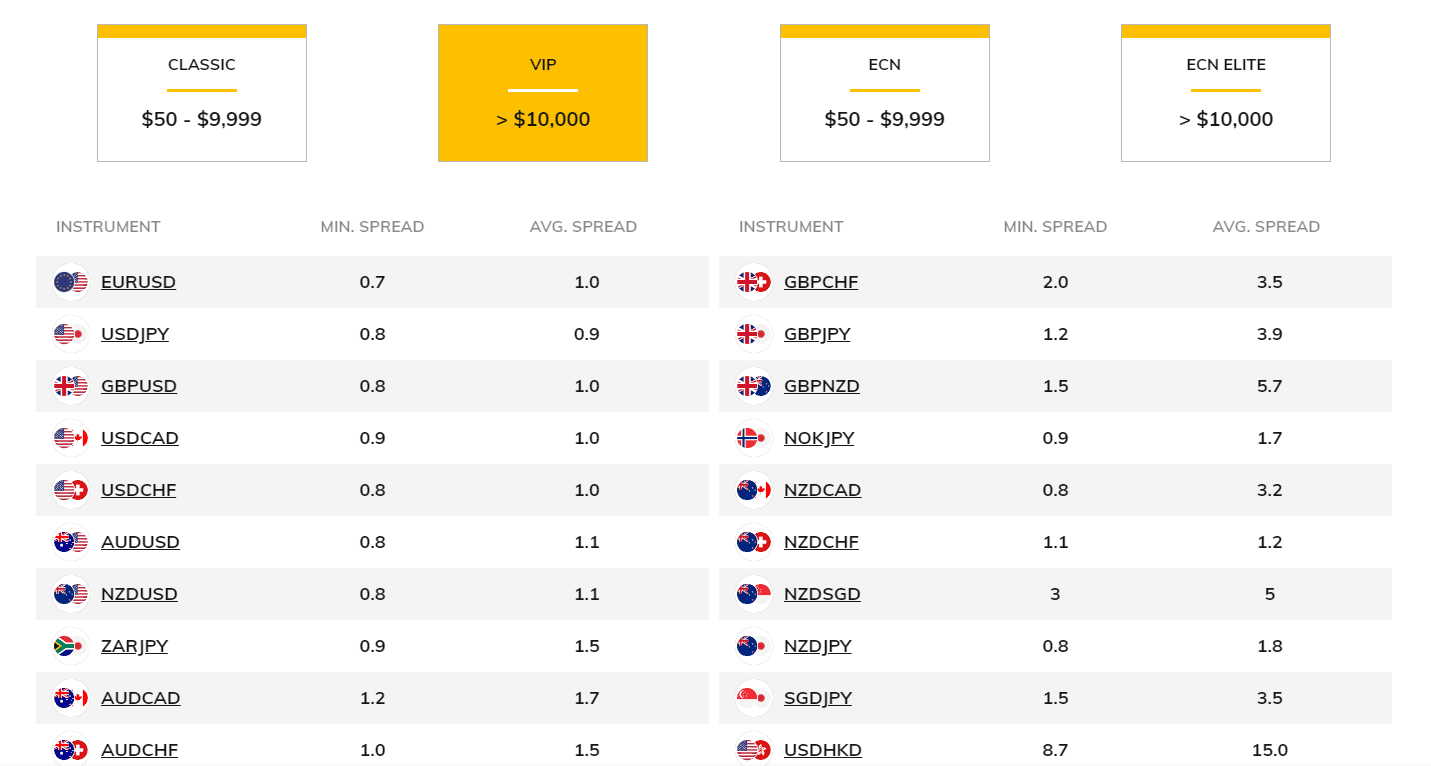
The spread is the difference between the bid price (what buyers are willing to pay) and the ask price (what sellers are asking for). In forex trading, this is essentially the commission the broker charges for executing your trade, even if no separate “commission” line item exists.
Why spreads are critical:
- Direct trading cost: A wider spread means the market must move further in your favor just to break even.
- Scalping impact: For high-frequency traders, low spreads are essential for profitability.
- Compound effect: Over 100 trades, a 0.2 pip difference can translate to significant savings.
There are two main types of spreads:
- Fixed spreads: Remain constant regardless of market conditions. Common in standard accounts.
- Variable (floating) spreads: Fluctuate with market liquidity and volatility. Common in ECN and Raw accounts.

OneRoyal is known for offering variable spreads that can drop to near-zero on their Raw accounts. Let’s explore why.
2. OneRoyal at a Glance: A Quick Overview
- Founded: 2006
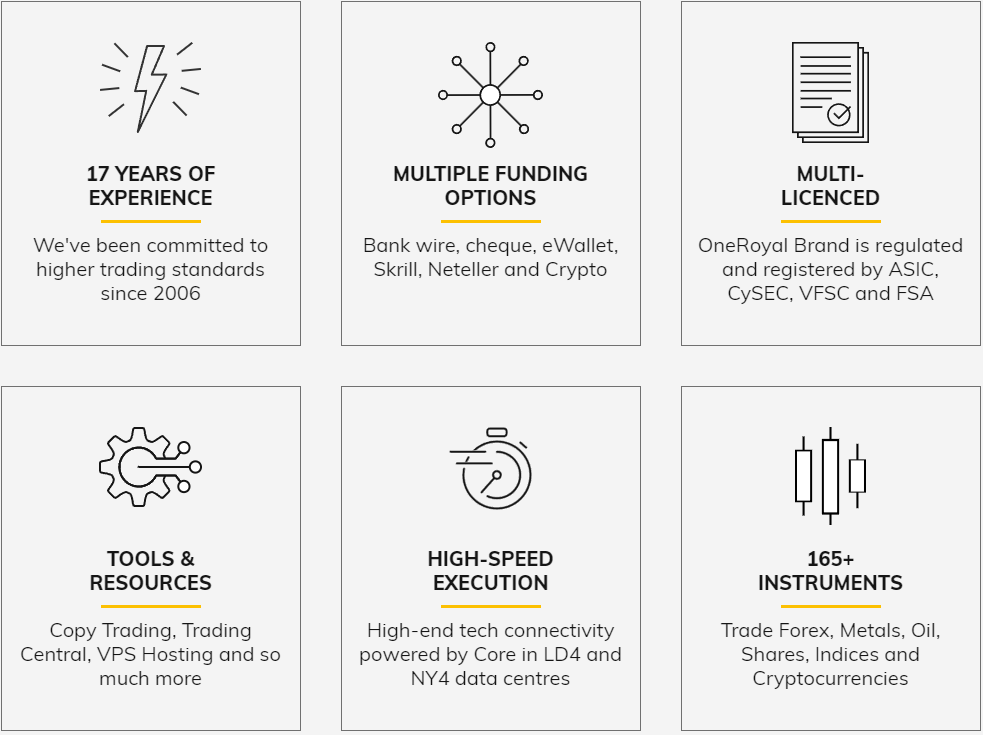
- Regulation: FCA (UK), CySEC (Cyprus), FSCA (South Africa), FSA (Seychelles) – varies by entity
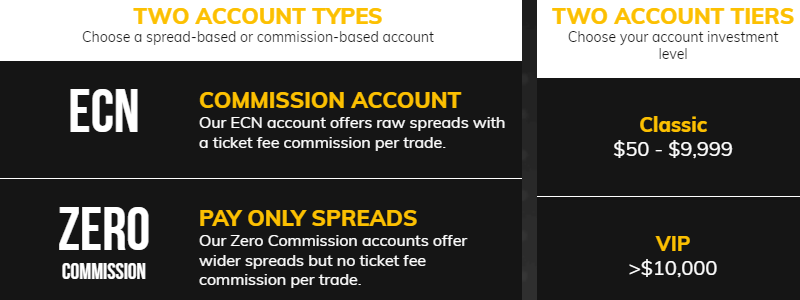
- Account Types: Classic, Premium, VIP, Raw Spread, ECN
- Trading Platforms: MT4, MT5, WebTrader, Mobile Apps
- Minimum Deposit: $100 (Standard), $500 (Raw/ECN)
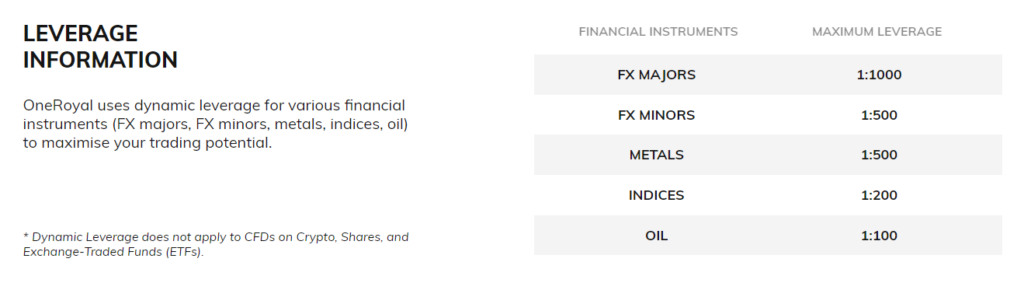
- Max Leverage: Up to 1:500 (depending on entity and instrument)
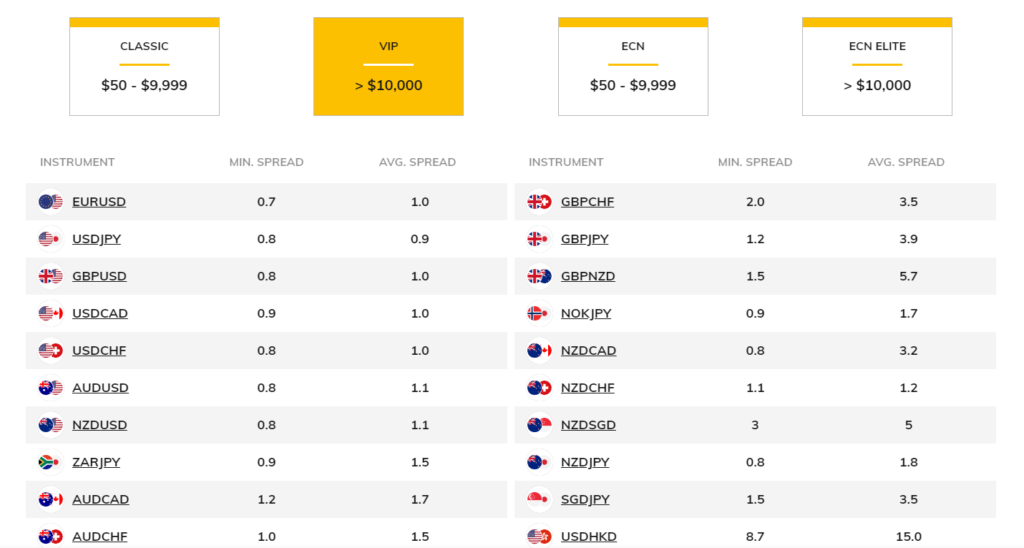
- Spreads: From 0.0 pips on Raw accounts + commission
OneRoyal has been in the industry for nearly two decades. Their longevity suggests stability, but as always, regulation varies by region—something we will verify later in this review.
3. The Main Reason: The Raw Spread Account Model
The single biggest reason OneRoyal can offer extremely low spreads is their Raw Spread account type.
How Raw Spread Accounts Work
In a standard “commission-free” account, the broker builds their profit into the spread. For example, if the interbank market spread is 0.2 pips, the broker might offer you 1.2 pips and keep the 1.0 pip difference.
In a Raw Spread account, the broker passes the raw interbank spread directly to the trader—which can be as low as 0.0 pips on major pairs like EUR/USD during peak liquidity. However, to make money, the broker charges a transparent commission per lot traded.
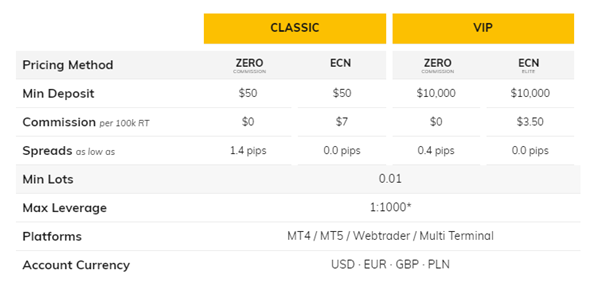
OneRoyal Raw Account Specifications (as of March 2026):
- Spreads: From 0.0 pips
- Commission: From $3.50 per side per lot (or $7 round turn)
- Minimum Deposit: $500

Why This Model Produces Lower Spreads
Because the broker is not hiding their revenue inside the spread, they have no incentive to widen it. The spread you see is the actual market spread. This model is particularly popular among:
- Scalpers: Who need tight spreads for quick entries and exits.
- Algorithmic traders: Who execute high volumes.
- Experienced manual traders: Who understand total cost analysis.

4. Liquidity Providers and Aggregation
Another structural reason for low spreads is liquidity aggregation.
OneRoyal states they partner with multiple tier-1 liquidity providers—major banks and financial institutions that provide the buy and sell quotes. By aggregating prices from several providers, the broker can offer their clients the best bid and ask prices available at any given moment.
Why Multiple Providers Matter
If a broker relies on a single liquidity source, they are limited to that provider’s spreads. With multiple providers, the broker’s technology automatically selects the tightest spread across all sources.
According to OneRoyal’s public documentation, their liquidity network includes several top-tier investment banks. While the specific names are confidential, the result visible to traders is consistent tight spreads during major market sessions (London, New York).
5. No Dealing Desk (NDD) Execution
OneRoyal operates a No Dealing Desk (NDD) model for their Raw and ECN accounts.
What Is a Dealing Desk?
Some brokers use a “dealing desk” where they manually (or automatically) intervene in client trades. They may take the opposite side of your trade, which creates a conflict of interest and can lead to wider spreads or requotes.
What Is No Dealing Desk?
NDD means your orders are passed directly to the liquidity providers without human intervention. There is no broker “dealer” adding a markup or rejecting your trade because it was profitable.

Benefits of NDD for spreads:
- Faster execution: No manual processing delays.
- True market pricing: You get the prices from the liquidity pool.
- No requotes: In theory, your trade is filled at the requested price or not at all.
OneRoyal’s NDD infrastructure is a prerequisite for offering raw spreads. If they had a dealing desk, they would need to widen spreads to protect themselves from risk, negating the low-spread advantage.
6. How OneRoyal’s Spreads Compare to Industry Averages
To give you a data-driven perspective, here is how OneRoyal’s Raw account stacks up against typical industry averages for EUR/USD (the most liquid pair).
| Broker Type | Average Spread (EUR/USD) | Commission (Per Lot Round Turn) | Total Cost (Per Lot) |
|---|---|---|---|
| Industry Standard (Commission-Free) | 1.0 – 1.2 pips | $0 | $10 – $12 |
| Typical ECN Broker | 0.2 – 0.4 pips | $7 – $8 | $9 – $12 |
| OneRoyal Raw Account | 0.0 – 0.3 pips | $7 | $7 – $10 |
Note: 1 pip on EUR/USD is approximately $10 per standard lot.
As the table shows, OneRoyal’s combination of near-zero spreads and competitive commission often results in a lower total cost than both commission-free and many other ECN brokers.
7. Real User Feedback: What Traders Say About OneRoyal Spreads
To complement the broker’s claims, we analyzed user discussions across major forex forums, Trustpilot, and social media channels in Q1 2026.
Commonly Reported Positives
- “EUR/USD spreads consistently under 0.2 pips during London open.”
- “No slippage on limit orders; spreads hold stable.”
- “Raw account is perfect for my scalping strategy.”
Commonly Reported Caveats
- “Spreads widen during NFP and FOMC events—but that’s normal.”
- “The $500 minimum for Raw account is higher than some competitors.”
- “Commission adds up; you need to trade enough volume to make it worthwhile.”
Our Assessment
The feedback aligns with the broker’s claims. Users who trade actively and monitor their costs report satisfaction with OneRoyal’s pricing. Occasional complaints about spread widening are typical of variable spread accounts and not unique to OneRoyal.
8. Are There Hidden Costs? Understanding the Commission Structure
Low spreads are attractive, but you must understand the total cost structure.
OneRoyal’s Raw account charges:
- Commission: $3.50 per side per lot (Standard lot = 100,000 units).
- Round turn (open + close): $7 per lot.
Example Calculation
If you trade 5 standard lots of EUR/USD:
- Spread cost: Assuming 0.1 pip average = $5 (0.1 pip x $10 per pip x 5 lots).
- Commission cost: $7 x 5 lots = $35.
- Total cost: $40.
Compare this to a broker with a 1.0 pip spread and no commission:
- Spread cost: 1.0 pip x $10 x 5 lots = $50.
- Commission: $0.
- Total cost: $50.

In this scenario, OneRoyal saves you $10. The savings increase with volume.
Other Fees to Consider
- Swap rates (overnight fees): Check OneRoyal’s swap rates if you hold positions overnight.
- Inactivity fees: OneRoyal may charge fees after periods of no trading—verify current terms.
- Deposit/withdrawal fees: Some payment methods incur fees.
9. Regulatory Status and Safety of Funds
Low spreads mean little if your funds are not safe. OneRoyal operates through several entities with different regulators.
Verified Regulatory Information (as of March 2026)
- OneRoyal EU Ltd: Regulated by CySEC (Cyprus) – MiFID compliant, negative balance protection, investor compensation fund.
- OneRoyal Global Ltd: Regulated by FSA (Seychelles) – More flexible leverage, but lower tier of regulation.
- OneRoyal UK: FCA authorized (historic) – Check current status; some entities may have changed.
What This Means for You
- EU clients: Traded under CySEC, offering strong protections but lower leverage.
- International clients: Often under FSA, with higher leverage but fewer protections.
Always verify the specific entity you will be trading with and ensure it matches your risk tolerance and regulatory preferences.
10. Trading Platforms and Spread Stability
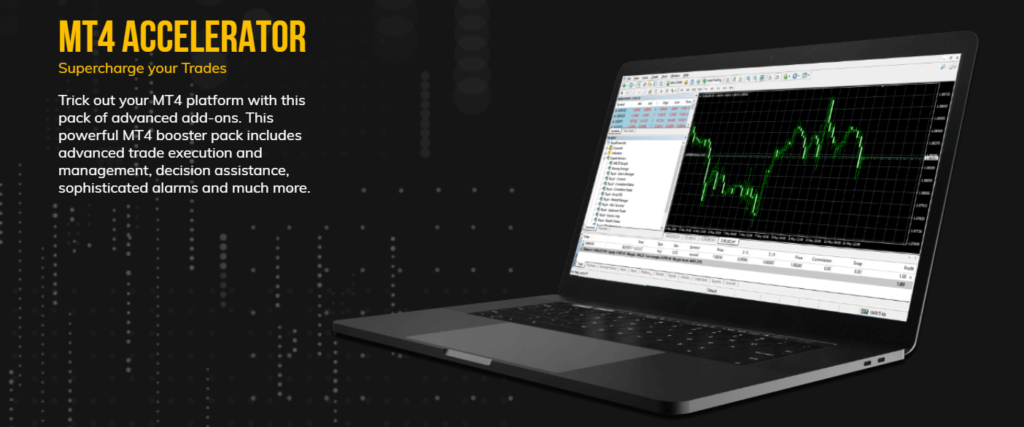
OneRoyal offers the industry-standard MetaTrader 4 (MT4) and MetaTrader 5 (MT5) platforms, plus proprietary mobile apps.
Platform Impact on Spreads
The platform itself does not determine spreads, but execution quality does. OneRoyal’s NDD infrastructure integrates with MT4/MT5 via bridging technology. User reports suggest:
- Consistent execution: Few requotes during normal conditions.
- Stable spreads: As advertised during peak hours.
- Fast order processing: Suitable for scalping and automated trading.
If you use Expert Advisors (EAs), MT4/MT5 compatibility is a major advantage.
11. When Spreads Widen: Volatility and News Events
No broker can offer ultra-low spreads 100% of the time. Market conditions change.
Typical Spread Widening Scenarios
- High-impact news: NFP, CPI, FOMC, central bank announcements.
- Market opens: Sunday open (low liquidity).
- Major geopolitical events: Unexpected shocks.
OneRoyal’s spreads, like all variable spreads, will widen during these times. This is normal and reflects the underlying market. Traders should:
- Avoid trading during news if they require tight spreads.
- Use limit orders to control entry prices.
- Check spread history in the platform before trading.

12. Who Is OneRoyal Best For?
Based on our analysis, OneRoyal is particularly well-suited for:
✅ Scalpers and Day Traders
The Raw account’s near-zero spreads during peak hours make frequent, small-profit trades viable.
✅ Algorithmic and High-Volume Traders
Low total cost per lot benefits automated strategies executing dozens or hundreds of trades daily.
✅ Experienced Manual Traders
Traders who understand cost structures and can optimize their trading around liquid sessions.
❌ Beginners (Maybe)
The Raw account requires understanding commissions and variable spreads. Beginners might prefer a standard fixed-spread account initially. OneRoyal offers Classic accounts for this purpose.
13. Frequently Asked Questions

Q: Does OneRoyal have hidden fees?
A: No significant hidden fees, but always check swap rates, inactivity fees, and withdrawal costs for your specific payment method.
Q: Can I scalp on OneRoyal?
A: Yes. OneRoyal permits scalping and does not restrict EA usage.
Q: Are OneRoyal’s spreads really 0.0 pips?
A: On the Raw account, spreads can drop to 0.0 pips during peak liquidity. However, average spreads are typically 0.1–0.3 pips.

Q: Is OneRoyal regulated?
A: Yes, by CySEC, FSA, and historically FCA. Check which entity serves your region.
Q: What is the minimum deposit for low spreads?
A: The Raw account requires a minimum deposit of $500.
14. Final Verdict: Is Low Enough?
Yes, OneRoyal offers some of the most competitive spreads in the forex market, particularly for active traders using the Raw account.
The combination of:
- Raw interbank pricing from 0.0 pips,
- Transparent commission structure,
- NDD execution,
- Multiple liquidity providers
- Creates a genuinely low-cost trading environment.
However, spreads alone do not make a broker “the best.” You must also consider:
- Regulatory protections (CySEC vs. FSA),
- Deposit/withdrawal processes,
- Customer support quality,
- Platform stability.
OneRoyal scores well on most fronts, but we always recommend testing with a demo account first to ensure the execution matches your trading style.
15. How TraderFactor Can Help
At TraderFactor, we do not stop at surface-level claims. We dig into the data so you can trade with confidence.

Our OneRoyal Broker Review Includes:
- ✅ Regulatory verification – Direct links to official registers (FCA, CySEC, FSA) with last checked dates.
- ✅ Fee breakdown – Complete analysis of spreads, commissions, and hidden costs.
- ✅ User feedback summary – Aggregated from trusted forums and review sites (updated March 2026).
- ✅ Account type comparison – Classic vs. Premium vs. Raw vs. ECN.
- ✅ Withdrawal and deposit analysis – Based on user reports and broker policies.
➡️ [Read the Full OneRoyal Review (Last Verified: March 2026)] ➡️
Disclaimer:
TraderFactor or partners have prepared all the information. The information does not contain a record of TraderFactor or partner’s prices or an offer of or solicitation for a transaction in any financial instrument. No representation or warranty is given as to the accuracy or completeness of this information. Any material provided does not regard the specific investment objective and financial situation of any person who may read it. Past performance is not a reliable indicator of future performance.